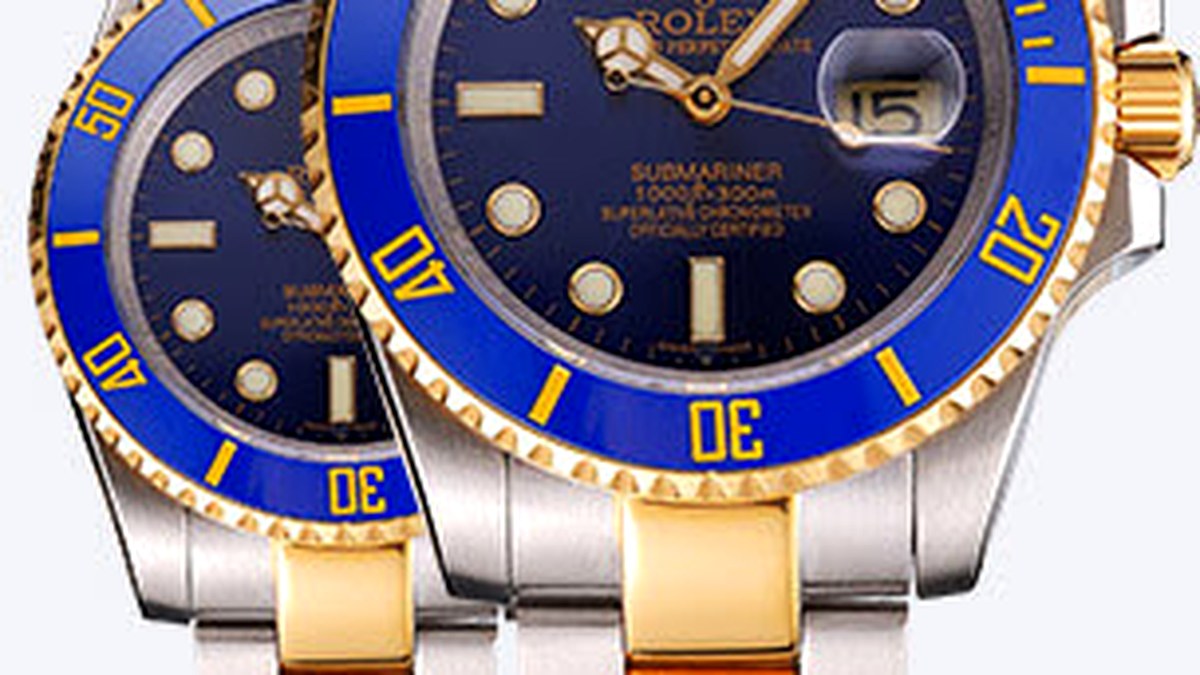
Yacht-Master is not simply a polished Submariner
The Yacht-Master shares an Oyster-sports vocabulary but has its own bezel, dial and finishing identity. Replica evaluation should therefore focus on whether the watch reproduces the intended Yacht-Master reference rather than using generic Submariner parts with a different dial.
Bezel construction is the visual center
Raised numerals, polished surfaces and matte fields create a different light pattern from a Submariner dive bezel. Check numeral height, edge sharpness, zero alignment and whether the bezel action feels consistent. A glossy insert with shallow printing can look acceptable in a flat image but loses the characteristic depth in hand.
Case finishing and bracelet
Polished surfaces make waviness, rounded edges and uneven transitions easier to see. Inspect lug tops, case sides and bracelet center sections under a single directional light source. End links should follow the case curve without a visible shelf or large gap.
Water claims still require testing
The nautical name can encourage overconfidence. As with any replica, visual similarity does not verify gasket condition, crown tube installation or crystal seating. Treat pressure rating as a test result for the individual watch.
Compare the actual watch, not only the listing title
Inspect bezel finish, dial contrast, case polishing, bracelet fit and material consistency on the exact Yacht-Master-style sample under neutral light.
Visit RetailerQC checklist
- Confirm the exact Yacht-Master reference style.
- Inspect raised bezel numerals and surface contrast.
- Check polished case and bracelet surfaces for distortion.
- Verify date/Cyclops alignment where fitted.
- Pressure-test before water exposure.
Raised bezel numerals need side-light inspection
Front lighting can flatten the Yacht-Master bezel and hide shallow relief. A low-angle light source reveals whether numerals and markers have clean edges and consistent height. Run the light around the bezel to check that polishing is even and that matte areas remain uniform.
Polished case sides reveal waviness
Hold a straight object or window reflection against the polished case side. Distorted reflections can reveal uneven polishing that a diffuse studio setup hides. Crisp transitions between polished and brushed surfaces are especially important around lugs and bracelet interfaces.
Reference materials affect expected weight and finish
Yacht-Master references span different material combinations, so a generic “correct weight” figure is not useful. Verify the intended reference and use weight only as context. Material composition requires stronger evidence than a scale reading.
Bezel action and alignment
Rotate the bezel through its full travel, checking resistance and lateral play. The zero point should align cleanly with the dial. If the design is intended to reproduce a bidirectional Yacht-Master bezel, the action should match that reference rather than a Submariner-style unidirectional mechanism.
Bracelet comfort matters on polished models
Polished center areas show scratches quickly. Buyers who plan daily wear should consider how easily the finish can be maintained and whether refinishing a coated replica will expose the base material. Ask about spare links before resizing a bracelet aggressively.
Use-case realism
A yacht-themed design does not remove the need for pressure testing. If the watch will see water, obtain a current test on the exact watch. If it is mainly a dress/sports piece, finish consistency and bracelet comfort may deserve more weight than a theoretical pressure rating.
Dial and bezel contrast should remain readable
The Yacht-Master often uses subtler bezel/dial combinations than a Submariner. Under bright light, polished bezel numerals can disappear if surface contrast is poor. Check readability outdoors and under diffuse indoor light rather than only in a studio photograph.
Case edge preservation
Highly polished cases can be over-finished at the factory, rounding edges before the watch is even worn. Compare left and right lugs for symmetry and look at the transition into crown guards. Crisp but not sharp geometry is a better sign than mirror polish alone.
Bracelet-to-case color matching
On two-tone or coated versions, case and bracelet can come from different production batches. Compare them in the same daylight image. A small color difference can become more obvious after wear because bracelet surfaces receive more abrasion than the case.
Bezel texture should be inspected in directional light
Yacht-Master-style bezels often combine raised numerals with a contrasting surface treatment. Rotate the watch under one light source and check whether the texture is even between numerals, whether polished edges are crisp and whether the insert or bezel sits uniformly around the crystal. Uneven texture is easier to see in moving reflections than in a front-on catalogue image.
Case polishing can hide geometry loss
A mirror finish is not automatically accurate. Compare the left and right lugs, crown-guard transitions and the line between polished and brushed surfaces. Over-polishing rounds the geometry and can make the case look soft even when the surface is flawless.
Two-tone and coated builds need color consistency checks
Photograph the case, crown, bezel and bracelet in the same neutral daylight. Components from different coating batches can shift slightly in hue. Also inspect the clasp interior and link sides because those areas reveal base-metal contrast and early wear sooner than the top surface.
Bracelet comfort is part of the model experience
Check first-link articulation, clasp edges and balance of the watch head on the wrist. A visually accurate case can still feel top-heavy if the bracelet is too light or rigid. If the watch is intended for regular wear, comfort should be evaluated alongside reference accuracy.
Frequently asked questions
Can I judge a Yacht-Master replica using a Submariner guide?
Some case and bracelet checks overlap, but bezel construction, finish and reference details differ enough to justify a separate baseline.
Does a rotating bezel prove the watch is suitable for water sports?
No. Pressure performance depends on the sealed case system and must be tested.
Why are polished surfaces important on this model?
They are more exposed and make uneven polishing or rounded edges easier to notice.
Should the bracelet feel like a Submariner bracelet?
Not necessarily. Evaluate the bracelet against the exact Yacht-Master reference and material configuration being copied.