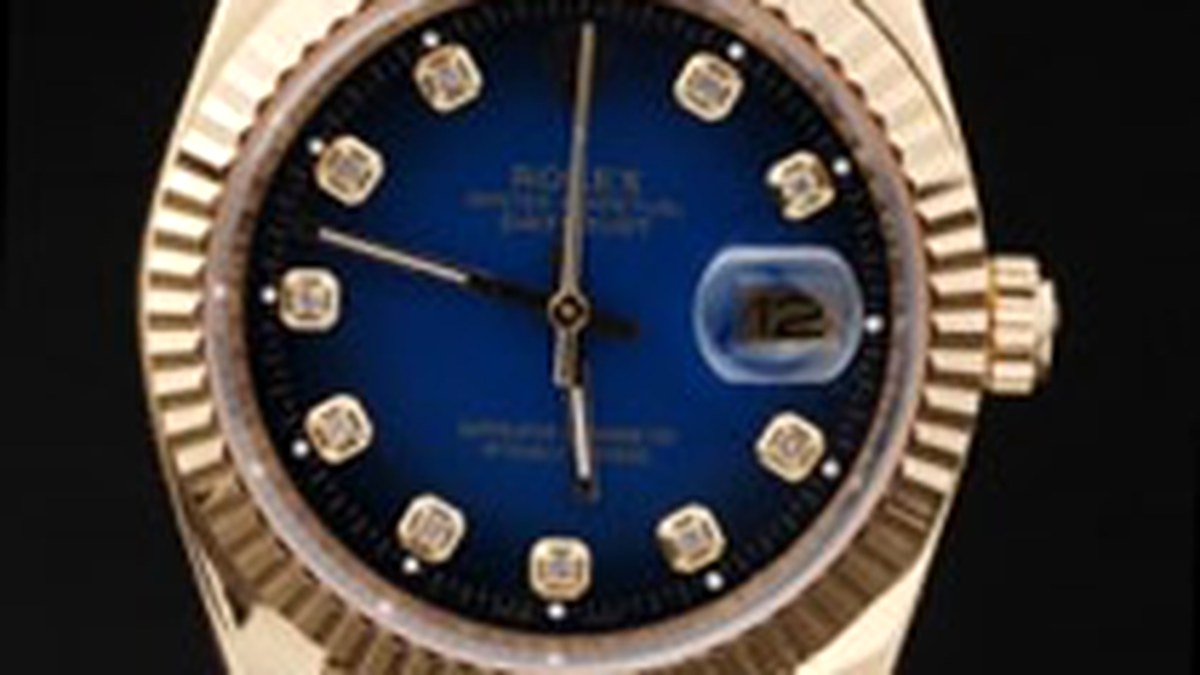
Movement names are claims, not grades
Replica-watch listings often compress several questions into one label: origin, beat rate, complication support, visual similarity and quality. Those questions need to be separated. A movement can be reliable without resembling a Rolex caliber; another can be visually decorated to look similar while being harder to service.
MIYOTA 8205, 8215 and 9015
| Movement | Native calendar | VPH | Running time | Height |
|---|---|---|---|---|
| MIYOTA 8205 | Day + date | 21,600 | ~42 h | 5.67 mm |
| MIYOTA 8215 | Date | 21,600 | ~42 h | 5.67 mm |
| MIYOTA 9015 | Date | 28,800 | ~42 h | 3.90 mm |
These figures come from MIYOTA's published specifications: 8205, 8215 and 9015. They matter because a movement cannot be evaluated only by how the rotor looks. Native complication support affects module height, crown behavior, hand stack and service complexity.
“Clone” needs a definition
Some sellers use clone to mean a movement with bridges styled after a Rolex caliber; others mean an architecture intended to reproduce the crown functions and component layout more closely. Ask which components are interchangeable, whether the movement can be identified without the decorative rotor, and which parts a watchmaker can actually source.
Beat rate is not origin
A 28,800-vph movement is not automatically Swiss, and a 21,600-vph movement is not automatically low quality. Beat rate affects seconds-hand cadence and some engineering trade-offs, but accuracy depends on regulation, positional behavior, lubrication and overall condition.
Calendar modules and thickness
If the base movement does not natively provide the displayed complication, an additional module may be used. Modules can change stem height, crown position, hand stack and overall case thickness. Day-Date and GMT replicas are especially important to inspect from the side because the dial-side mechanism may explain an otherwise surprising profile.
What to request from a seller
- Clear movement photograph without heavy reflections.
- Video of winding and every crown position.
- Timegrapher result in more than one position if precision matters.
- Observed power reserve rather than advertised reserve only.
- Service/parts information for the actual base caliber.
Compare the actual watch, not only the listing title
Identify the base caliber and verify crown functions, complication support, timing behavior and service options before accepting a decorated movement name as proof of architecture.
Visit RetailerTimegrapher numbers need context
Rate, amplitude and beat error can help identify movement condition, but a single dial-up screenshot is not a complete diagnosis. Shipping position, state of wind, lift-angle settings and movement caliber affect interpretation. If precision matters, compare more than one position after the movement has reached a stable state of wind.
Power reserve should be observed, not assumed
Start with a fully wound watch, record the time and leave it undisturbed until it stops. The result does not need to match a genuine Rolex specification because the replica may use a different movement. It should, however, be reasonably consistent with the claimed base caliber and condition. A much shorter reserve can indicate incomplete winding, friction or service needs.
Automatic winding efficiency
Some movements are efficient enough to stay fully wound with normal daily wear; others require more motion or manual winding. Rotor direction, bearing design and winding system influence behavior. Listen for abnormal scraping and check that the rotor does not contact the case back.
Stem height and crown position
The relationship between movement stem height and case design is important. If a movement sits too low or too high, the crown can appear misaligned with the mid-case and winding can place side-load on the stem. Calendar or GMT modules can make this more complex. A side view of the crown at rest is therefore a useful movement clue.
Parts interchangeability claims
Statements that a clone movement accepts genuine parts should be treated narrowly. Ask which specific parts are interchangeable and whether a watchmaker has verified the claim. A few compatible components do not make the entire movement identical, and genuine service centers will not generally service counterfeit watches.
Movement cleanliness and assembly
Macro photographs can reveal scratched screws, fingerprints, loose debris and inconsistent lubrication around visible jewels. Decoration quality is not the same as mechanical cleanliness, but obvious assembly contamination is a legitimate QC concern.
Regulation versus repair
A movement running fast or slow may only need regulation, while low amplitude, irregular beat traces or inconsistent performance between positions can indicate deeper service needs. Do not assume every timing problem can be fixed with a regulator adjustment. A watchmaker should diagnose lubrication, escapement and power-delivery issues before chasing a perfect rate number.
Decorated plates can complicate identification
Extra bridges or rotor covers may hide the base movement. Ask for photographs from angles that reveal the balance, automatic-winding system, setting works or caliber markings where possible. Identifying the base architecture is valuable because parts and service information are usually organized by that caliber, not by the decorative name used in the listing.
Manual winding behavior
Check whether manual winding is supported and whether the crown feels smooth through several turns. Grinding, slipping or abrupt changes in resistance can be warning signs. Do not overwind forcefully; automatic movements generally use a slipping bridle or equivalent system, but the crown and stem can still be damaged by excessive force.
Frequently asked questions
Is 9015 better than 8215?
It is thinner and runs at a higher frequency, but suitability depends on the watch architecture, complication requirements, regulation and service priorities.
Can an 8215 power a Day-Date display?
The 8215 is date-only in MIYOTA documentation. A weekday display requires another mechanism or a different base movement.
Does a rotor engraved 3235 prove a clone 3235?
No. Rotor and bridge decoration are visual cues. Architecture and parts compatibility need independent verification.
What movement evidence matters most?
A clear movement photo plus a full crown-function video is more informative than a marketing name alone.