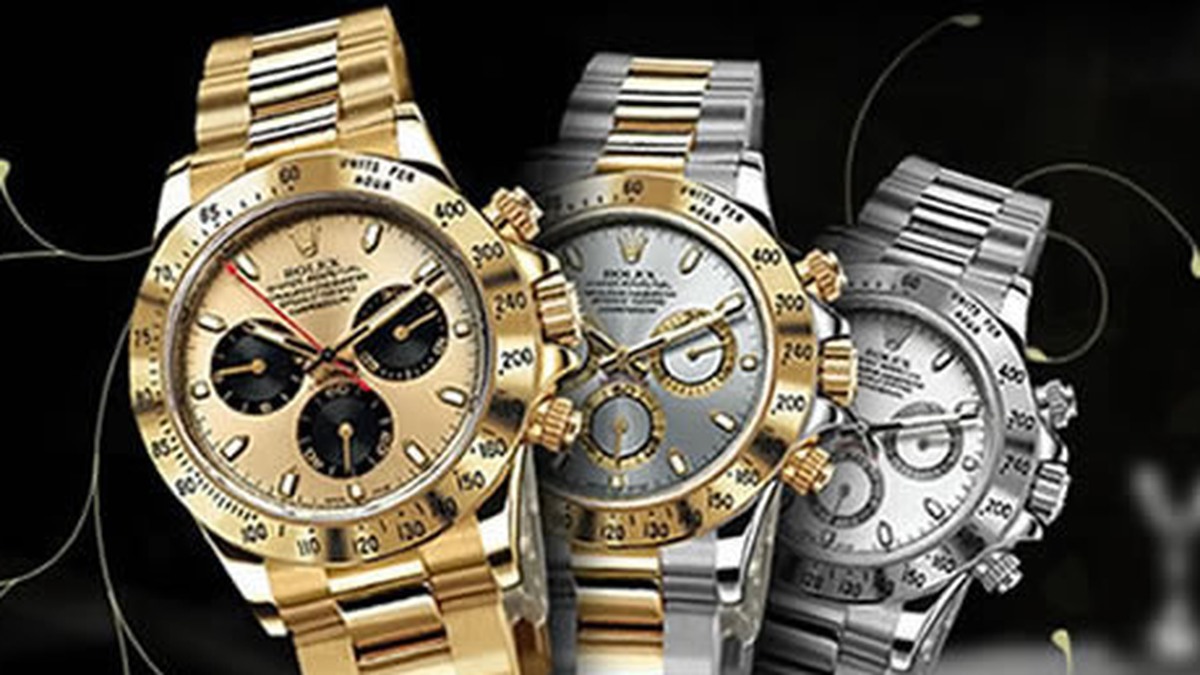
Material claims need evidence beyond color
Stainless-steel grade, gold content, ceramic, sapphire and coating descriptions can materially affect price, yet most cannot be verified from studio photos. Good evaluation separates the substrate from the surface finish and asks what evidence exists for each claim.
316L versus 904L-style steel claims
Both are corrosion-resistant stainless steels used widely in demanding applications, but visual appearance after polishing is not a reliable alloy test. A seller's use of “904L” should be treated as a claim unless supported by material documentation or testing. Case shape, finishing quality and corrosion behavior can still be evaluated independently.
Gold-tone coatings
Terms such as PVD, IP, electroplating and “wrapped gold” are often used inconsistently. Ask what the base metal is, what coating process is claimed and whether thickness is specified. Wear tends to show first at edges, bracelet articulation points, clasp contact surfaces and screw/pin locations.
Weight is context, not proof
Two watches with the same external dimensions can differ in weight because of bracelet construction, movement mass, hollow cavities and case-back design. A heavy watch does not by itself prove solid gold, platinum or a particular stainless alloy.
Sapphire and ceramic
A scratch-resistant transparent crystal may be sapphire, but visual appearance alone does not establish composition or coating. Ceramic-style bezel inserts should be checked for surface uniformity, engraving, fill and fit. Material identification and execution quality are separate questions.
Compare the actual watch, not only the listing title
Treat every material label as a claim to verify through construction details, wear surfaces, seller documentation and realistic expectations about refinishing and repair.
Visit RetailerPractical materials checklist
- Ask for the base material and surface treatment separately.
- Inspect high-contact areas for early coating wear.
- Do not use weight as the sole authenticity test for a material claim.
- Check brushed/polished transitions under directional light.
- Use independent testing when material composition materially affects price.
Surface finishing can be judged even when alloy cannot
Although alloy composition is difficult to prove visually, finishing quality is visible. Brushed grain should run consistently; polished areas should reflect straight lines without ripples; transitions should be sharp where the reference calls for them. These observations remain useful regardless of whether a 316L or 904L claim is verified.
Coating thickness claims need caution
Sellers sometimes quote micron thicknesses without documentation. Even a real thickness number does not fully predict durability because adhesion, surface preparation and use conditions matter. Friction at bracelet joints can wear through a coating faster than a protected case surface with the same nominal thickness.
Color matching across components
Gold-tone cases, bezels, crowns and bracelets may be coated in different production batches. Compare them in the same light. A crown or clasp that is noticeably greener or redder than the case can make the watch look inconsistent even when each component is well finished individually.
Magnetism and steel claims
A magnet test is not a reliable way to identify stainless grade in an assembled watch. Small components and cold-working can affect magnetic response, and the movement contains many other metals. Use proper material analysis if alloy identification is important.
Crystal anti-reflective treatment
Sapphire claims are often accompanied by anti-reflective coating claims. Compare reflections and color cast from several angles, but remember that visual appearance alone does not identify coating chemistry. Uneven coating or scratches can be a practical QC issue even when the base crystal is satisfactory.
Material choice versus intended wear
A daily-use watch benefits from easily serviceable finishes. Highly polished or coated bracelets may show wear faster than brushed steel. Buyers should weigh how the watch will age, not only how it looks under new-product lighting.
Finishing durability is different from scratch resistance
A hard surface can resist fine scratches yet chip at an edge, while a softer polished metal may scratch easily but be refinished repeatedly. Evaluate how the finish will age and whether repairs are possible. Ceramic-style inserts, coated bracelets and polished steel each fail in different ways.
Mixed-metal contact points
Where coated parts meet bare steel, small color differences and wear lines can appear. Check crown tubes, clasp interiors, bracelet screws and the underside of end links. These areas are less likely to be retouched for catalogue photos and often reveal construction more clearly.
Ask what happens after damage
Replacement availability should influence material choice. A scratched steel clasp may be refinished; a deeply worn plated clasp may require recoating or replacement. A chipped ceramic-style insert may need a complete insert swap. Ownership cost is therefore part of material quality.
Base metal and surface treatment are two separate specifications
A seller may describe the visible color but not the material underneath. Ask separately what the case or bracelet is made from and how the surface color is produced. Plating, PVD-style coatings and solid alloys age differently, and the correct maintenance approach depends on that distinction.
Weight is useful evidence, but not proof by itself
Two watches can differ in weight because of movement, bracelet construction, link count, case-back thickness or internal inserts. Use weight as one consistency check alongside dimensions and disclosed construction. A heavy watch does not automatically prove a particular precious-metal content, just as a lighter watch does not prove poor steel.
Inspect hidden wear surfaces
The underside of the clasp, inside of bracelet links, crown edges and contact points between links often reveal surface treatment earlier than the top-facing surfaces. Ask for photos of these areas on a used display sample if available. They provide a more realistic picture of how a finish may age than freshly polished catalogue photography.
Crystal claims should include more than the word “sapphire”
Optical clarity depends on thickness, curvature, anti-reflective treatment and the relationship to any Cyclops lens. A crystal can be scratch resistant yet still create distortion at the edge or poor date magnification. Judge the complete optical stack rather than treating material name as a full quality score.
Frequently asked questions
Can I identify 904L steel from a photograph?
No. A photograph can show finishing quality but not reliably establish alloy composition.
Does heavier mean better?
Not necessarily. Weight is affected by many components and construction choices.
Which areas show gold-tone wear first?
Clasp edges, bracelet contact surfaces, end-link contact points and frequently handled case edges are common early wear zones.
Is ceramic quality only about scratch resistance?
No. Color uniformity, engraving, fill, dimensional fit and impact behavior also matter.