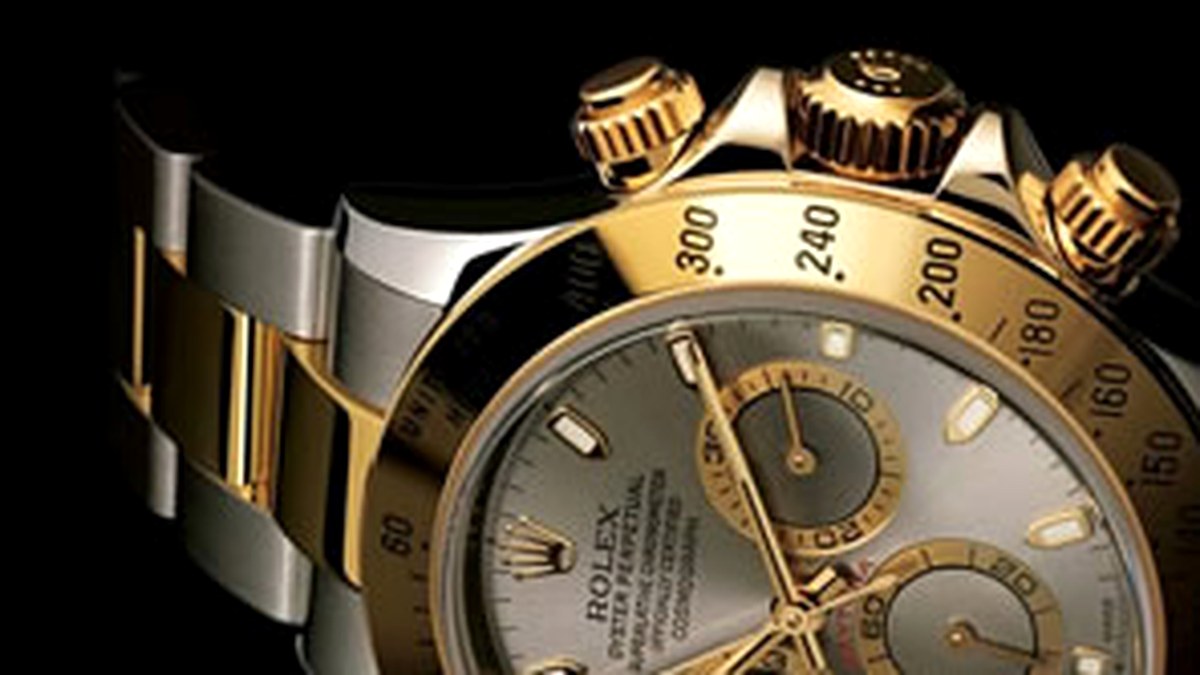
The Daytona is fundamentally a chronograph problem
A Daytona-style watch can look attractive in a still photo while using a chronograph architecture that changes the dial proportions, hand stack and case thickness. That is why the first question should not be “Which factory?” but “Which movement architecture is inside, and are all chronograph functions genuine to that movement?”
Subdial placement reveals movement architecture
Measure the relationship between the subdial centers and the main pinion rather than judging only the printed artwork. Some movements require wider or narrower spacing, and decorative dial design cannot fully hide that. Check whether each subdial is functional and whether its displayed scale matches what the movement actually records.
Pushers and chronograph sequence
Start, stop and reset the chronograph repeatedly. The central seconds hand should start cleanly, stop reliably and reset to zero without obvious bounce or misalignment. The minute and hour counters should advance at the correct intervals. A watch that uses decorative subdials or nonfunctional pushers should be described honestly rather than marketed as a mechanically equivalent chronograph.
Case thickness and side profile
Chronograph movement height affects the entire watch. Compare the case from the side, including pusher height, crown position and crystal/rehaut stack. A watch may look convincing from above yet appear bulky because the movement requires extra vertical space.
Tachymeter bezel and dial printing
Check the ceramic-style bezel for centered numerals, consistent engraving and a clean transition into the case. On the dial, inspect the applied coronet, marker alignment, subdial rings and small text. The Daytona has a dense dial, so small typographic errors accumulate quickly.
Compare the actual watch, not only the listing title
Ask for a complete chronograph video, subdial reset behavior, case thickness, pusher operation and movement identification for the exact Daytona-style sample.
Visit RetailerMovement serviceability matters more than decoration
A visually decorated movement can be difficult to service if replacement parts are unavailable. Ask whether a local watchmaker can identify the base caliber, whether chronograph parts are obtainable and whether the watch can be regulated without special proprietary tooling. A less visually ambitious movement with reliable parts support can be a better ownership choice.
Chronograph architecture changes dial spacing
Different base chronograph movements place their gear trains and counters at different positions. Dial manufacturers can modify artwork, but they cannot move the physical shafts without additional engineering. That is why subdial center-to-center measurements are more informative than logo quality when identifying how closely a replica follows the current Daytona layout.
Record the entire chronograph cycle
A ten-second seller clip may show only the central chronograph seconds hand. A proper test should run long enough to demonstrate the minute counter, and ideally the hour counter where practical. Stop and restart several times, then reset from different elapsed times. Watch whether hands snap back to zero and whether the central hand lands exactly on its index.
Pusher feel can reveal assembly quality
Chronograph pushers should have consistent resistance and a clean engagement point. Excessive looseness, grinding or very different resistance between start/stop and reset can indicate adjustment or construction issues. Screw-down pusher collars, where fitted, should thread smoothly and should not be treated as proof of water resistance.
Dial depth and rehaut
A thicker base movement often forces the dial farther from the crystal or increases case-back thickness. Compare the watch at a shallow angle: an unusually deep rehaut can make the dial appear recessed. This is a useful visual clue when the listing claims a thin architecture but the case profile suggests otherwise.
Service before decoration
Chronographs contain more parts and are more expensive to repair than simple three-hand movements. Ask whether the base movement has documented parts support, whether independent watchmakers will service it, and what happens if a chronograph lever or clutch component fails. Decorative finishing is secondary to the ability to maintain the movement.
Reference-era consistency
The Daytona has evolved across bezel, dial, movement and case generations. A ceramic bezel and current-style dial should be compared with the corresponding modern case and bracelet details. Vintage-inspired builds can be legitimate designs, but mixing eras should be described accurately rather than sold as an exact current reference.
Chronograph hand alignment should be checked at every reset point
The central seconds hand is only one reset component. Check minute and hour counters as well. If a subdial returns slightly off zero, ask whether the movement has an adjustment procedure or whether the hand needs to be removed and reinstalled. Repeated resetting that produces different zero positions can indicate a mechanical problem rather than simple hand placement.
Rotor noise and case resonance
Some automatic chronograph movements transmit more rotor sound through the case than a three-hand movement. Record a short audio/video clip with the watch moved gently. Noise alone does not establish poor quality, but scraping, intermittent contact or a rotor that appears to stop abruptly deserves investigation.
Daily-wear trade-offs
A thicker, more complex replica can be less comfortable and more expensive to service than a simpler model. Buyers who rarely use the chronograph may prefer a robust architecture over the closest visual clone; buyers who value mechanical similarity may accept higher service risk. A good guide makes that trade-off explicit rather than presenting one movement as universally best.
Frequently asked questions
Is a 28,800-vph chronograph automatically a high-end Daytona replica?
No. Beat rate is only one specification. Architecture, chronograph function, dial spacing, case thickness and serviceability matter more.
What Daytona detail should I test in video?
The full start-stop-reset chronograph cycle, including subdial advancement and reset alignment.
Does a 40 mm case guarantee correct proportions?
No. Thickness, lug shape, bezel diameter, rehaut and pusher/crown placement all affect the result.
Is a decorated 4131-style movement the same as Rolex calibre 4131?
Do not assume so. Decoration and engraving are visual features; mechanical architecture and parts compatibility require independent verification.