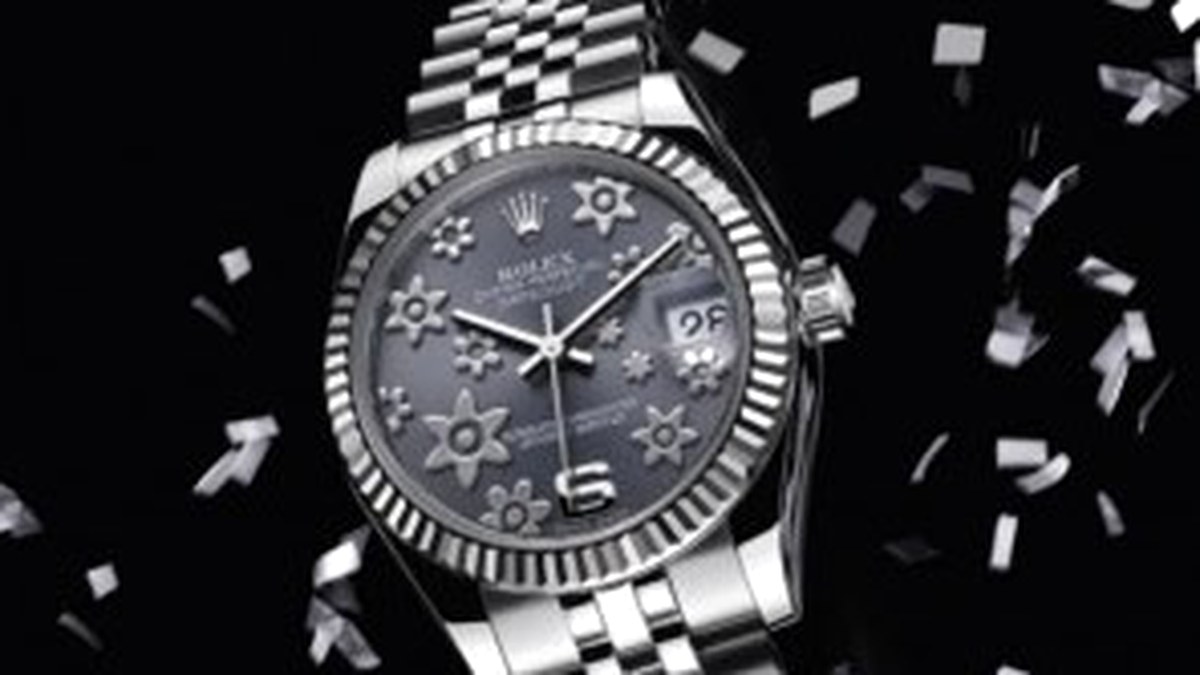
The bracelet is a mechanical component, not an accessory
Bracelets change how a watch wears, how weight is distributed and how the case looks on the wrist. End-link fit, taper, articulation and clasp construction often expose quality differences faster than dial macro photography.
Oyster-style bracelets
Broad three-piece links make brushing direction and edge definition easy to inspect. Check whether the end links follow the case, whether center and outer links articulate without binding, and whether the taper remains smooth into the clasp.
Jubilee-style bracelets
The multi-link design should articulate freely without feeling loose or sharp. Because there are more polished surfaces and link junctions, uneven finishing can create a noisy reflection pattern. Check end-link gaps and clasp centering carefully.
President-style bracelets
Rounded three-piece links create a softer visual flow. Gold-tone versions deserve extra attention at articulation points because coating wear can reveal the underlying base metal. Check link screws/pins, end links and concealed-clasp alignment.
Clasp systems
Inspect the full open-and-close sequence, not only the engraved exterior. Safety locks, extension systems and comfort adjustments should move positively and stop where intended. Rattling, sharp stamped edges and excessive lateral play reduce both comfort and confidence.
Compare the actual watch, not only the listing title
Judge the exact bracelet from end-link fit, articulation, clasp operation, screw or pin quality and finish transitions rather than from a bracelet name alone.
Visit RetailerBracelet QC sequence
- Lay the watch flat and inspect end-link gaps.
- Flex the bracelet through its full range and feel for binding.
- Check taper and link symmetry.
- Open and close every clasp mechanism.
- Inspect coating wear zones and screw/pin finishing.
End links are where case and bracelet engineering meet
Look at the gap from above, the height from the side and the way the first movable link drops away from the case. An end link can fill the visible gap yet sit too high, making the bracelet flare outward. Proper articulation is especially important on smaller wrists.
Screw and pin quality
Bracelet adjustment hardware should sit flush and should not show heavily damaged slots on a new watch. Screws that back out during wear can be secured appropriately by a watchmaker, but excessive factory thread locking can make resizing difficult and damage screw heads.
Stretch versus articulation
A bracelet that moves freely is not necessarily “loose.” Healthy articulation occurs at intended joints; stretch is excessive play between parts. Hold the bracelet horizontally and compare how far it sags, but interpret that test according to bracelet style and construction.
Clasp engraving is a low-priority quality signal
Sharp engraving can be reproduced cheaply. Focus first on clasp geometry, locking surfaces, hinge pins and adjustment mechanisms. A beautifully engraved clasp that opens unexpectedly is a worse component than a plainer clasp with secure function.
Coated bracelet maintenance
Traditional polishing can remove or thin a surface coating. If a gold-tone bracelet becomes scratched, refinishing options may be limited without recoating. Buyers should ask about spare links and replacement clasp availability before choosing a coated watch for heavy daily wear.
Fit is part of quality
Correct sizing should leave the watch centered without forcing the clasp to one side of the wrist. Half-link or micro-adjust availability can make a larger difference to comfort than a small variation in watch-head weight.
Measure taper instead of judging it by eye
Bracelet width at the lugs and at the clasp strongly affects the visual balance of a watch. A one- or two-millimeter difference can change the impression significantly. If reference accuracy matters, ask for caliper measurements rather than relying on perspective-distorted photos.
Link finishing after resizing
Resizing can expose poor screw threads, burrs or coating weakness. Inspect removed links and the inside of screw holes. If a plated bracelet sheds coating during the first adjustment, expect accelerated wear at other high-friction points.
Clasp comfort and wrist position
The clasp should sit near the center of the underside of the wrist. If the available link distribution forces it far to one side, comfort can suffer even when the watch head is correctly sized. Half-links and micro-adjust systems can solve this, so check what adjustment range the bracelet actually provides.
End-link geometry is more important than a tiny engraving
The first visual break between watch head and bracelet happens at the end links. Look at the top surface, the gap at the case, the angle of the first moving link and whether both sides sit at the same height. A bracelet can have attractive polishing and a convincing clasp yet still make the whole watch look wrong if the end-link shoulders are too low, too narrow or visibly loose.
Photograph the watch flat on a table and then let the bracelet hang naturally. These two positions show whether the end link is simply tight when compressed or whether it actually articulates correctly. Unequal gaps left and right often point to tolerance or spring-bar problems rather than a cosmetic issue.
Clasp testing should include load, not only appearance
Open and close the clasp repeatedly before sizing the bracelet. The safety lock, folding blades and micro-adjustment system should engage positively without needing excessive force. Inspect the blade edges for burrs and check whether the closed clasp sits centered under the wrist. A clasp that photographs well but flexes, rattles or releases under light pressure is a functional defect, not a finishing preference.
Bracelet stretch, noise and long-term wear
New multi-link bracelets can have more lateral movement than broad three-link bracelets, but excessive play should not be dismissed as “normal.” Hold the bracelet horizontally by the watch head and compare how far it droops. Recheck after several months if the watch is worn frequently. Fast-growing play can indicate soft pins, loose screws or poor link tolerances.
Noise alone is not a reliable quality score because dry links, protective films and construction style all affect sound. Combine noise with tactile checks: smooth articulation, absence of sharp edges, secure screws and consistent resistance from link to link.
Frequently asked questions
Which bracelet is easiest to judge in photos?
Oyster-style bracelets expose broad finishing surfaces, while Jubilee and President styles often require video to judge articulation.
Does bracelet weight prove solid links?
Weight helps provide context but is not proof; internal construction can vary.
What makes a clasp feel poor?
Excessive play, rough edges, weak locking action and inconsistent extension mechanisms are common issues.
Can a good bracelet improve an average watch?
Yes. Fit, balance and tactile quality have a major effect on the overall experience.