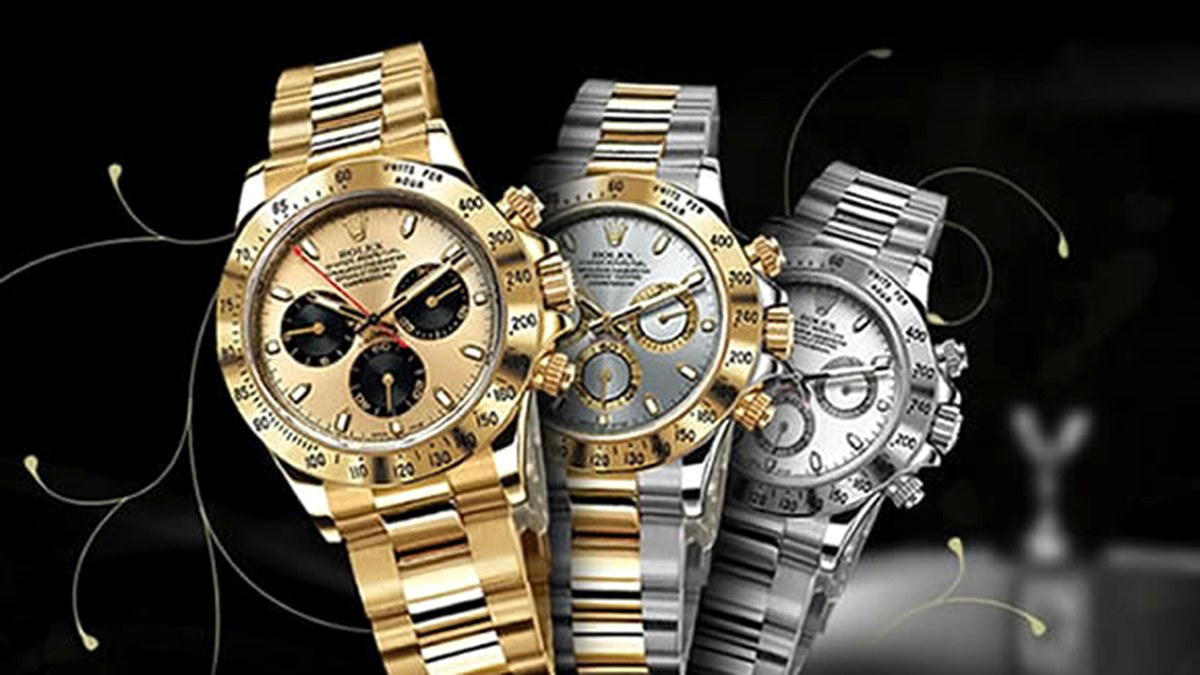
Why Rolex copies remain one of the largest replica-watch categories
Rolex is one of the most recognizable names in watches, so it is also one of the most frequently copied. The reason is not limited to price. Models such as the Daytona, Submariner, Datejust and Day-Date have highly recognizable shapes, bezels, bracelets and dial layouts. That familiarity creates demand for watches that reproduce the visual language of the originals at a much lower cost.
Replica sellers often describe quality with labels such as AAA+, Swiss made and exact copy. Those terms are still common in the market, but they are not reliable quality standards by themselves. Two watches advertised with the same label can use different movements, cases, crystals, bracelets and finishing. A better approach is to compare the actual watch and the exact model it is intended to resemble.
Rolex Daytona copies: why this model demands closer inspection
The Daytona was the main model discussed on the original homepage, and it remains a useful example because it is much harder to reproduce convincingly than a simple three-hand watch. A Daytona-style watch must get the chronograph layout, subdial spacing, pusher geometry, bezel scale, case thickness and bracelet proportions working together.
Modern genuine Daytona references use Rolex chronograph movements and command prices far above the figures commonly quoted in older replica-watch guides. Replica versions may use very different mechanical architectures. Some are true mechanical chronographs; others use altered layouts or decorative components. That difference affects subdial position, thickness, reliability and serviceability. For that reason, a movement name alone is not enough—buyers should verify whether the chronograph functions actually operate as claimed.
For subdial layout, pusher operation and case-profile checks, see the Rolex Daytona replica guide.
Three traditional replica quality levels—and why the labels need updating
Replica watches are commonly discussed in three broad levels: inexpensive quartz copies, mid-range mechanical knockoffs and more expensive “precise replicas.” That framework is still useful as a historical starting point, but price and marketing labels should not be treated as proof of quality.
| Traditional label | What it often means | What to verify |
|---|---|---|
| Budget copy | Low-cost movement and simplified construction | Functions, case finish, bracelet, crystal and basic reliability |
| Mid-range mechanical | Automatic movement with closer visual details | Movement identity, dimensions, calendar behavior and finishing |
| High-tier / “AAA+” / “1:1” | Marketing for a more detailed build | Individual-watch QC, movement architecture, case proportions and after-sales support |
The important change is that the label should come last, not first. Start with the actual model, then check measurable features: diameter, thickness, lug shape, bezel geometry, dial printing, bracelet construction, movement functions and any water-resistance test results.
Movement claims: Swiss ETA, Japanese movements and clone calibres
Older replica-watch articles often used “Swiss ETA” as a shortcut for high quality. The market is more complicated today. Genuine ETA movements, Asian movements, Japanese movements and movements described as “clone” calibres can all appear in listings, and the name in the listing does not prove what is inside the watch.
For a simple Datejust- or Oyster-Perpetual-style watch, an established automatic movement can be practical even when it does not copy Rolex architecture. For a Daytona or GMT-Master II, movement architecture matters more because it controls chronograph or GMT functionality. For a Day-Date, calendar layout is especially important because the watch needs both a date and a full day display.
Our movement guide explains how to check beat rate, calendar functions, power reserve, hand stack and serviceability without assuming that a rotor engraving proves the calibre.
What makes a convincing Rolex copy?
The original site emphasized appearance, weight and logo details. Those are still relevant, but they need to be judged more carefully. Weight alone cannot prove steel grade or precious-metal construction, and a sharp logo cannot compensate for an incorrect case shape. The most convincing watches tend to be consistent across many small areas rather than exceptional in only one.
- Case and proportions: diameter, thickness, lug shape and crown position should match the intended generation.
- Dial: printing, markers, hands and date-window alignment are easier to judge in straight-on photographs.
- Bezel: fluting, ceramic inserts, engravings and rotation should suit the model.
- Bracelet and clasp: articulation, taper, end-link fit and clasp operation matter in daily use.
- Movement: the watch should perform the functions promised by the seller.
- Water resistance: treat it as a test result, not an assumption based on a screw-down crown.
Model families need different checks
Each Rolex family has its own weak points. Use the model guide that matches the watch you are comparing instead of relying on a generic “AAA” label.
Check 36/41 proportions, Cyclops magnification, Jubilee or Oyster bracelet finishing, and how the date changes at midnight.
SubmarinerInspect bezel action, crown-guard shape, dial lume, bracelet fit and any claim that the watch has been pressure tested.
DaytonaFocus on chronograph layout, subdial spacing, pushers, running seconds behavior and total case thickness.
Day-DateJudge day and date alignment, President-style bracelet quality, dial furniture and movement compatibility for the calendar setup.
GMT-Master IIVerify GMT hand behavior, bezel alignment, hand-stack clearance, date position and whether the 24-hour function works independently.
Oyster PerpetualLook at dial simplicity, marker finishing, smooth-bezel symmetry, case proportions and the differences between current and discontinued sizes.
Buying a replica Rolex: evidence matters more than promises
Delivery guarantees and seller claims matter, but they should be evaluated separately from watch quality. Shipping terms still matter, but Promises such as “guaranteed to pass customs” or “impossible to tell from genuine” should not be treated as reliable information. A useful buying guide should focus on evidence the buyer can check before payment.
- Confirm the exact model, size and configuration being offered.
- Ask for photos or video of the actual watch rather than only catalog images.
- Verify movement functions, especially chronograph, GMT and day/date complications.
- Check return, replacement and shipping terms in writing.
- Do not assume terms such as “Swiss,” “super clone,” “AAA+” or “1:1” establish quality.
- For water use, request a recent pressure-test result for the individual watch.
For a step-by-step process, use the buying guide and QC checklist.
A short history behind the name
Rolex traces its origins to Hans Wilsdorf and Alfred Davis in London in 1905. Wilsdorf later registered the Rolex name in 1908, and the company moved its center of operations to Geneva. Rolex became closely associated with waterproof Oyster cases, automatic winding and chronometer-certified wristwatches. That history helps explain why its designs became so recognizable—and why the brand became such a large target for imitation.
Historical information is useful when it helps identify the design language of a specific model. It should not be used to imply that a replica shares the engineering, materials, testing or certification of a genuine Rolex.
Frequently asked questions
Does “Swiss made replica” guarantee better quality?
No. It is a marketing claim unless the seller can identify the movement and construction clearly. Judge the individual watch.
Is a more expensive Rolex copy always better?
No. Higher price can reflect a better movement or finishing, but it can also reflect marketing. Compare measurable details and QC evidence.
Which Rolex model is hardest to copy well?
Complicated models such as the Daytona and GMT-Master II create more technical challenges because movement architecture affects visible layout and function.
Can a replica be assumed to have the same water resistance as the genuine model?
No. Water resistance belongs to the individual watch and should be verified by testing.